
Armstrong County Criminal Court Records
An Armstrong County criminal court record is the case-level record kept by the court after criminal charges are filed, heard, transferred, or resolved. It can include the information or charge list, motions, plea paperwork, orders, sentencing sheets, costs, restitution, probation entries, and docket events. The Armstrong County Clerk of Courts is the criminal clerk for Court of Common Pleas case filings and criminal case documents not restricted by policy or court order. Public docket summaries are usually searched through UJS first, while document copies and certifications route to the local office.
Criminal matters may begin at the Magisterial District Court level with a complaint, preliminary arraignment, preliminary hearing, summary citation, bail event, or warrant activity. Cases that move to the Court of Common Pleas become part of the county's criminal trial-court record. Armstrong County is the 33rd Judicial District, and the Court of Common Pleas handles felony and misdemeanor criminal cases, while Magisterial District Courts handle preliminary criminal proceedings, traffic, summary offenses, and related lower-court matters. The charge-focused path is handled separately in Armstrong County arrest records and charges.
Search Armstrong County Criminal Court Records
The main online search channel is the Pennsylvania UJS Case Search. It provides free public docket sheets for Criminal Courts of Common Pleas and Magisterial District Courts. For Armstrong County criminal court records, choose the court level first. Use Criminal Courts of Common Pleas for county criminal cases that reached the trial court. Use Magisterial District Courts for preliminary hearings, summary cases, traffic-related criminal matters, and lower-court proceedings. UJS public dockets can be searched by participant name, docket number, organization name, and, through PAeDocket, identifiers such as OTN, police incident or complaint number, and SID.
- Open UJS Case Search and select the criminal court level that matches the case stage.
- Search by defendant name, docket number, OTN, complaint number, police incident number, or SID when available.
- Limit the search to Armstrong County where the portal offers a county selector.
- Open the docket sheet and review the charge table, event history, plea, disposition, sentence, and financial sections.
- Request certified copies or non-online case documents from the Armstrong County Clerk of Courts when the docket sheet is not enough.
Statewide criminal-history access is separate from a court docket. Pennsylvania State Police operate PATCH, the Pennsylvania Access to Criminal History system. PATCH is used for criminal-history background checks and is governed by criminal-history dissemination law, not by the same workflow as a county court docket search. The PATCH portal and the Pennsylvania State Police PATCH guidance are both documented Armstrong County research sources.
Pennsylvania Access to Criminal History is the statewide PATCH entry point for criminal-history requests.
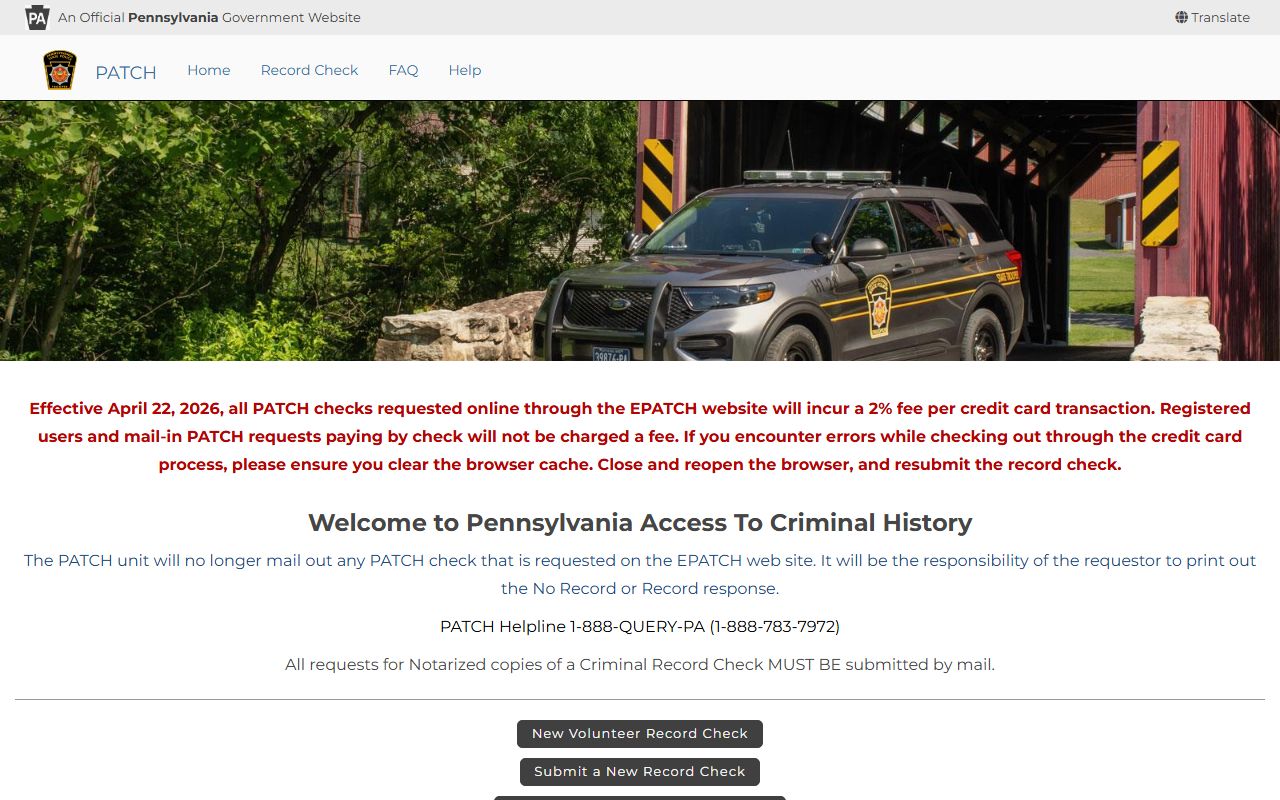
PATCH can help with a statewide criminal-history request, while UJS and the Clerk of Courts remain the case-record channels.
Armstrong County Criminal Case Flow
A criminal court record changes as the case moves forward. Early entries may come from the MDJ level, such as preliminary arraignment, preliminary hearing, complaint number, bail, and warrant activity. When charges reach Common Pleas, the docket may show the criminal information, formal arraignment, motions, plea court, trial setting, disposition, and sentencing. Armstrong County court materials also reference ARD applications, guilty plea questionnaires, electronic monitoring, work release, Intensive Supervision and Treatment Program materials, and Veterans Treatment Court resources that may appear in criminal-justice pathways.
Case flow: Charges Filed › Arraignment › Pretrial / Motions › Plea or Trial › Disposition › Sentencing
| Stage | What Happens |
|---|---|
| Charges Filed | The complaint or information identifies alleged offenses, statute sections, grading, and related identifiers such as OTN or complaint number where public. |
| Arraignment | The charges are formally presented and case status is addressed. A preliminary arraignment may appear at the MDJ level. |
| Pretrial / Motions | The docket may show motions, continuances, bail changes, discovery-related activity, or program applications. |
| Plea or Trial | The case may resolve by plea, verdict, dismissal, ARD-related outcome, or other disposition. |
| Disposition | The docket records the outcome of each charge or the case as a whole. |
| Sentencing | The court may enter confinement, probation, fines, costs, restitution, work release, electronic monitoring, or other ordered terms. |
Because each charge can have its own outcome, read the charge-level disposition and the sentence fields together. A single docket can include charges that were dismissed, reduced, amended, or resolved differently.
What Armstrong County Criminal Records Show
Public Armstrong County criminal court records can show more than a case name. A full reading starts with the docket number and court, then moves through party information, charges, court events, plea, disposition, sentence, and financial entries. Police agency, prosecutor, defense attorney, OTN, complaint number, warrant events, bail changes, probation events, fines, costs, and restitution may appear when public. Confidential identifiers, secure reports, juvenile information, sealed material, and expunged content are not ordinary public docket material.
| Field | What It Shows |
|---|---|
| Case Number | Common Pleas criminal docket identifier or MDJ docket number, including MJ-prefixed lower-court numbers. |
| Defendant | Public defendant information and aliases where the docket exposes them. |
| Agency and Attorneys | Police agency, district attorney, defense counsel, and other listed case participants. |
| Charges | Offense description, statute citation, offense date, grading, OTN, complaint number, and charge status where public. |
| Events | Arraignment, preliminary hearing, information filed, motions, continuances, plea court, sentencing, warrant, bail, and probation events. |
| Plea | The defendant's formal answer or the plea-related case action recorded by the court. |
| Disposition | The outcome of a charge or case, such as guilty, dismissed, withdrawn, acquitted, or other recorded result. |
| Sentence | Confinement, probation, fines, costs, restitution, supervision, or other ordered penalties after conviction or plea. |
18 Pa.C.S. § 9121 is the statewide criminal-history dissemination law.
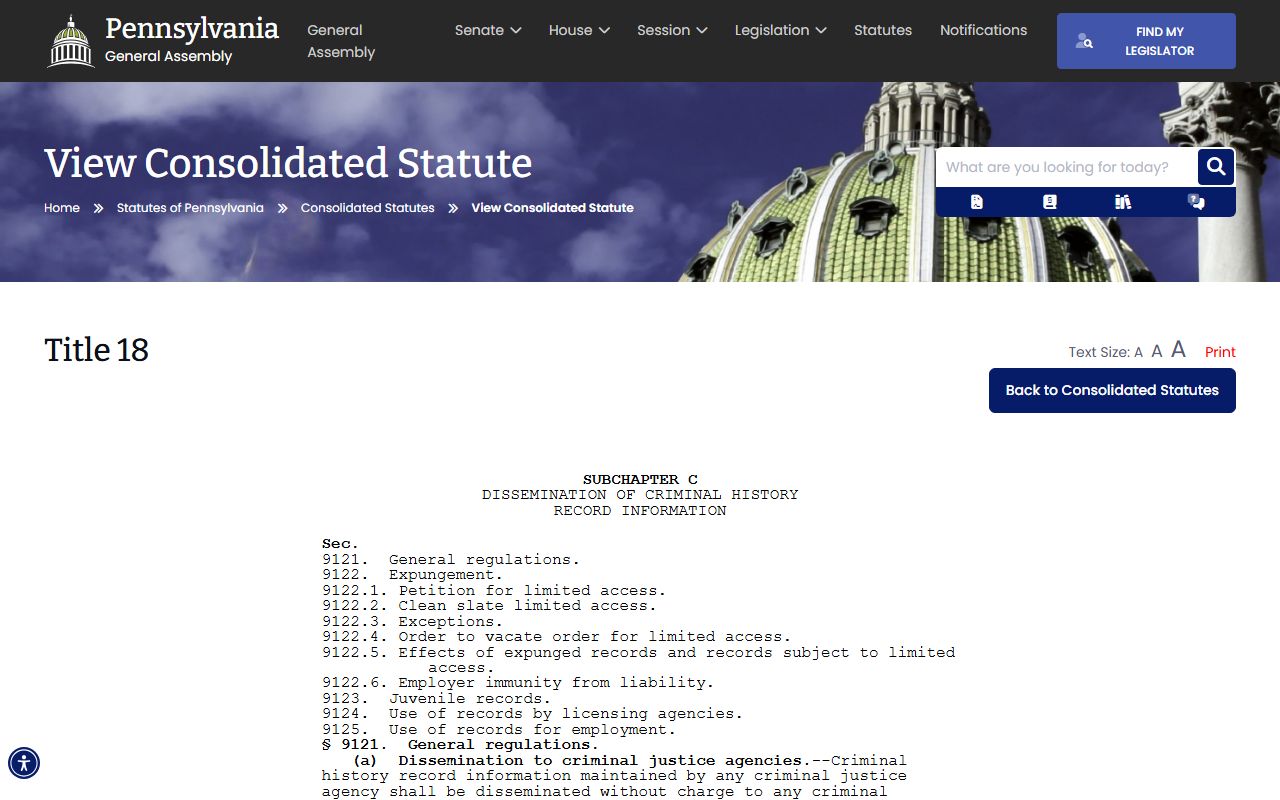
That statute matters when court records are compared with criminal-history reports from Pennsylvania State Police.
Armstrong County Charges vs Convictions
A charge is an accusation filed in the criminal process. A conviction is an outcome after a guilty plea, verdict, or other qualifying disposition. Armstrong County criminal court records can show charges that were dismissed, withdrawn, amended, reduced, or resolved through another outcome. That is why the docket's charge table should be read with the plea, disposition, and sentence fields. For a closer look at court charges after arrest, use the charge-specific record path rather than treating every filed charge as a conviction.
| Charge | Conviction | |
|---|---|---|
| Stage | Filed allegation in the complaint, information, citation, or docket. | Final outcome after plea, verdict, or recorded court disposition. |
| Where It Appears | Charge table, complaint number, OTN, MDJ docket, or Common Pleas docket. | Disposition and sentence fields, plus related financial and probation entries. |
| Public Meaning | Shows what was alleged or filed. | Shows the charge that resulted in guilt or another conviction-level outcome. |
| Record Risk | May remain visible even if later dismissed unless sealed or expunged. | May affect criminal history, sentencing, fines, costs, restitution, or supervision. |
Reading Dispositions and Sentences
Disposition is the outcome of a charge or case. In Armstrong County criminal court records, the disposition should be read with the charge grade, plea, event history, and sentence. A dismissed charge does not carry the same meaning as a guilty plea. A bench warrant event does not equal conviction. A sentence can include confinement, probation, fines, court costs, restitution, or supervision in the community. Armstrong County court materials also show local criminal-justice tools such as ARD, guilty plea questionnaires, electronic monitoring, work release, and Intensive Supervision and Treatment Program materials, which may affect how a docket reads.
The District Attorney's CRIMEWATCH warrant and arrest notices can show charge summaries, warrant type, issue date, arrest date, agency, and narrative. Those notices are useful for public context, but the court docket should be used for the current court status. PATCH may show statewide criminal-history information under Pennsylvania State Police rules. A certified court record, when required, should come from the Clerk of Courts rather than from a web summary.
Sealed vs Expunged Records
Sealing and expungement both limit public access, but they are not the same. Sealed or limited-access criminal records may still exist for authorized users. Expungement removes eligible criminal-history information under a statute or court order. Pennsylvania expungement law is important for Armstrong County criminal court records because many convictions are not simply erased, while nonconvictions, certain summary matters, and ARD-related outcomes may have relief paths. A person should identify exact docket numbers, charges, arrest dates, OTN, and dispositions before filing any petition.
| Sealed | Expunged | |
|---|---|---|
| Visibility | Public access is limited while the record may remain for authorized users. | Eligible criminal-history information is removed under statute or court order. |
| Where to Check | UJS, Clerk of Courts, and court orders controlling limited public access. | UJS, PATCH, agency records, and the expungement order after processing. |
| Eligibility | Depends on the order, record type, and access policy. | Controlled by Pennsylvania law, including proceedings identified in 18 Pa.C.S. § 9122. |
18 Pa.C.S. § 9122 is the Pennsylvania expungement statute cited for criminal-history relief.
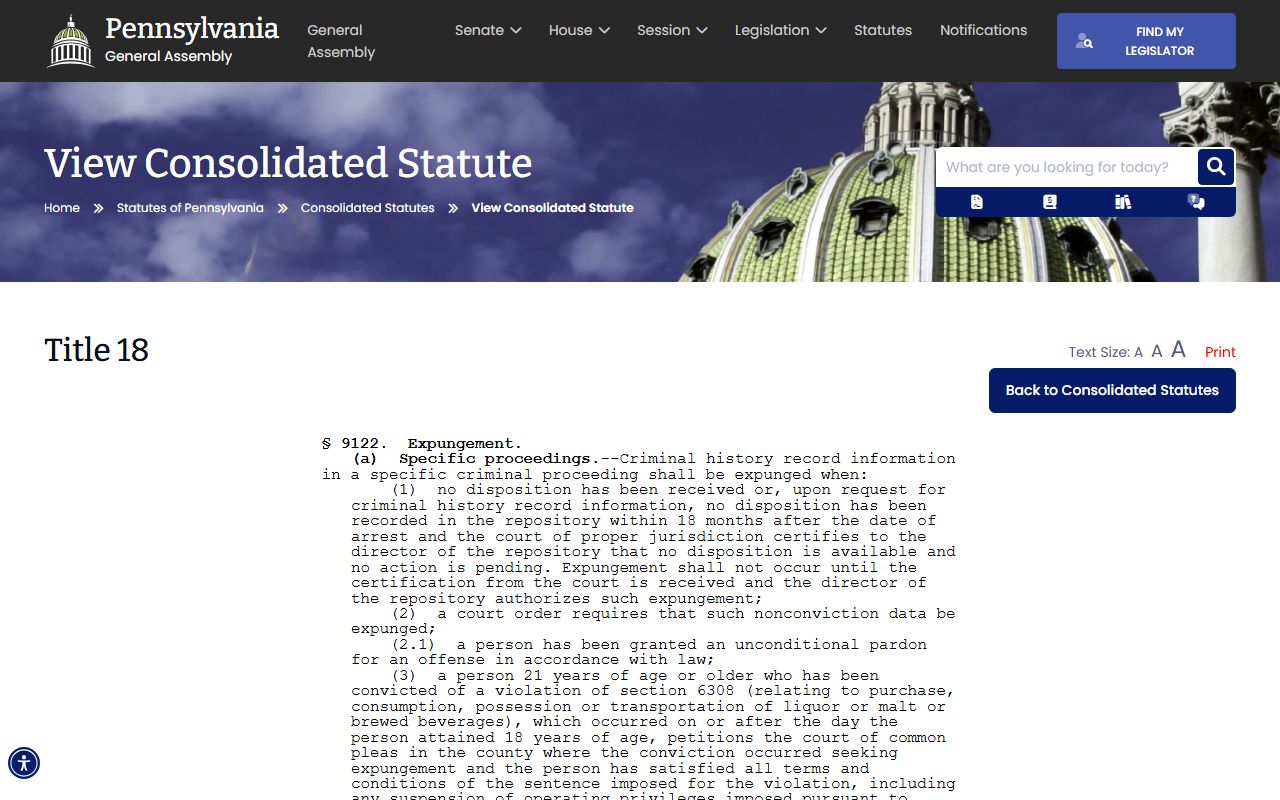
That source supports the distinction between ordinary public criminal dockets and records affected by a court-ordered expungement process.
Public Access to Criminal Court Records
Public criminal docket access for Armstrong County is governed by the UJS Case Records Public Access Policy. The policy controls public access to Pennsylvania appellate and trial court case records and the confidential filing procedures that keep protected information out of public view. The Pennsylvania Right-to-Know Law is a general state and local agency records law, but court case records are primarily handled through judiciary policies, court offices, and the court where the matter is heard.
Key Statutes:
18 Pa.C.S. § 9121 controls dissemination of criminal history record information.
18 Pa.C.S. § 9122 identifies proceedings where criminal history information may be expunged.
42 Pa.C.S. § 6307 restricts public access to juvenile court files and records concerning a child.
For documents not shown through public UJS docket sheets, use the Pennsylvania courts public-record request forms and submit them to the court where the case is being heard. For Armstrong County Court of Common Pleas criminal case documents, the local criminal clerk is the Clerk of Courts.
Background Check Considerations
A criminal court record lookup and a criminal-history background check are different tasks. UJS shows public docket information for court cases. PATCH is the statewide Pennsylvania State Police criminal-history request system, with help available through the PATCH guidance source and help line listed in the research. A private screening use, such as employment, tenant screening, insurance, credit, or another regulated purpose, has rules that go beyond casual public-record review.
The Pennsylvania State Police PATCH guidance source explains the official statewide background-check process.
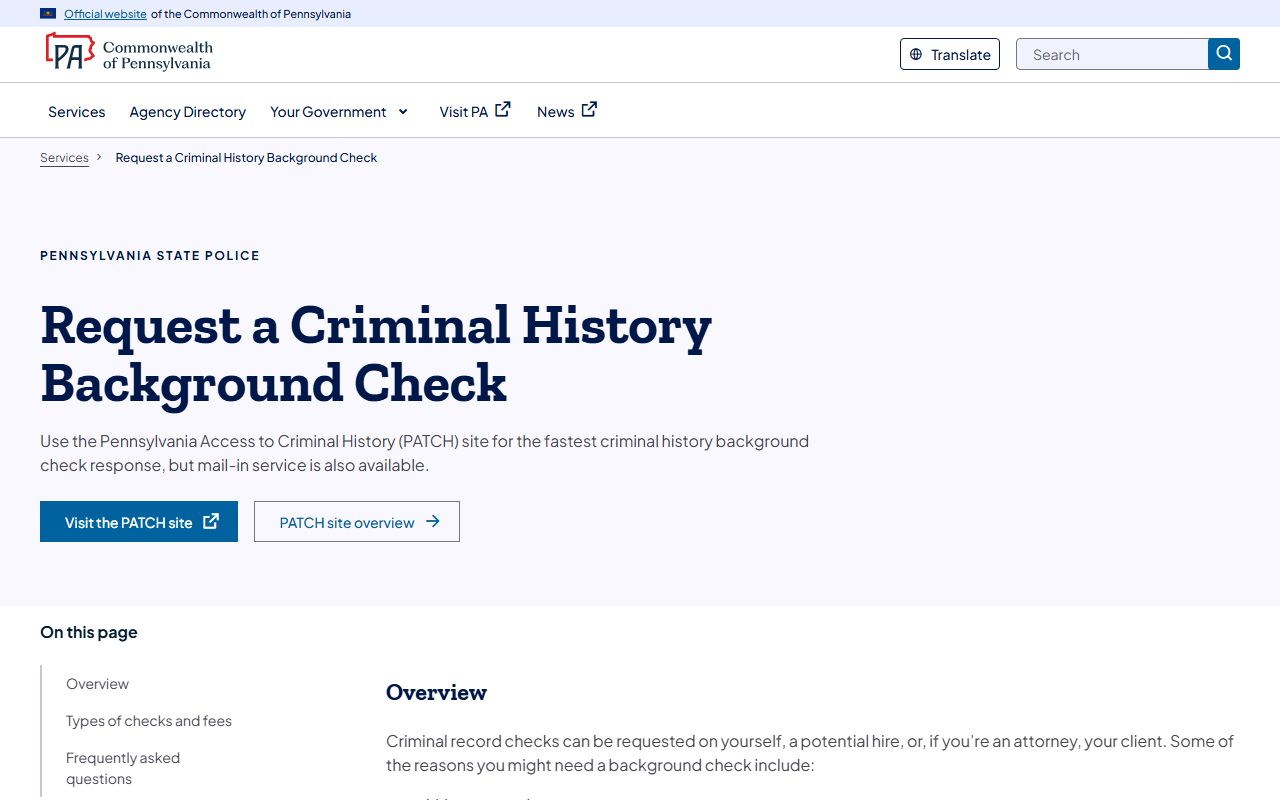
Use PATCH when the need is a statewide criminal-history request rather than a docket sheet for one Armstrong County case.
Important: Do not treat a court docket lookup as a substitute for a regulated criminal-history background check.
Restricted Armstrong County Criminal Records
Restricted criminal records include juvenile court files, sealed matters, expunged records, secure docket content, confidential identifiers, and documents withheld under the UJS public access policy. Juvenile records are restricted by 42 Pa.C.S. § 6307. Adoption and guardianship files are treated as sealed and impounded by Armstrong County's Register/Recorder office because of sensitive information, although those are Orphans' Court matters rather than ordinary criminal case records. The same access principle applies: protected records are not public just because a related name or docket exists.
For active criminal charges where jail is possible, the Armstrong County Public Defender page says applicants should apply as soon as charges are received or at least four business days before a scheduled hearing. The Public Defender does not handle civil cases, traffic citations, or most summary citations unless jail is anticipated. Required documents include income proof, benefit information, support orders, the police criminal complaint, hearing notice, charge documents, and household income verification.